Learning About Umbanda While Sitting in the Assistência
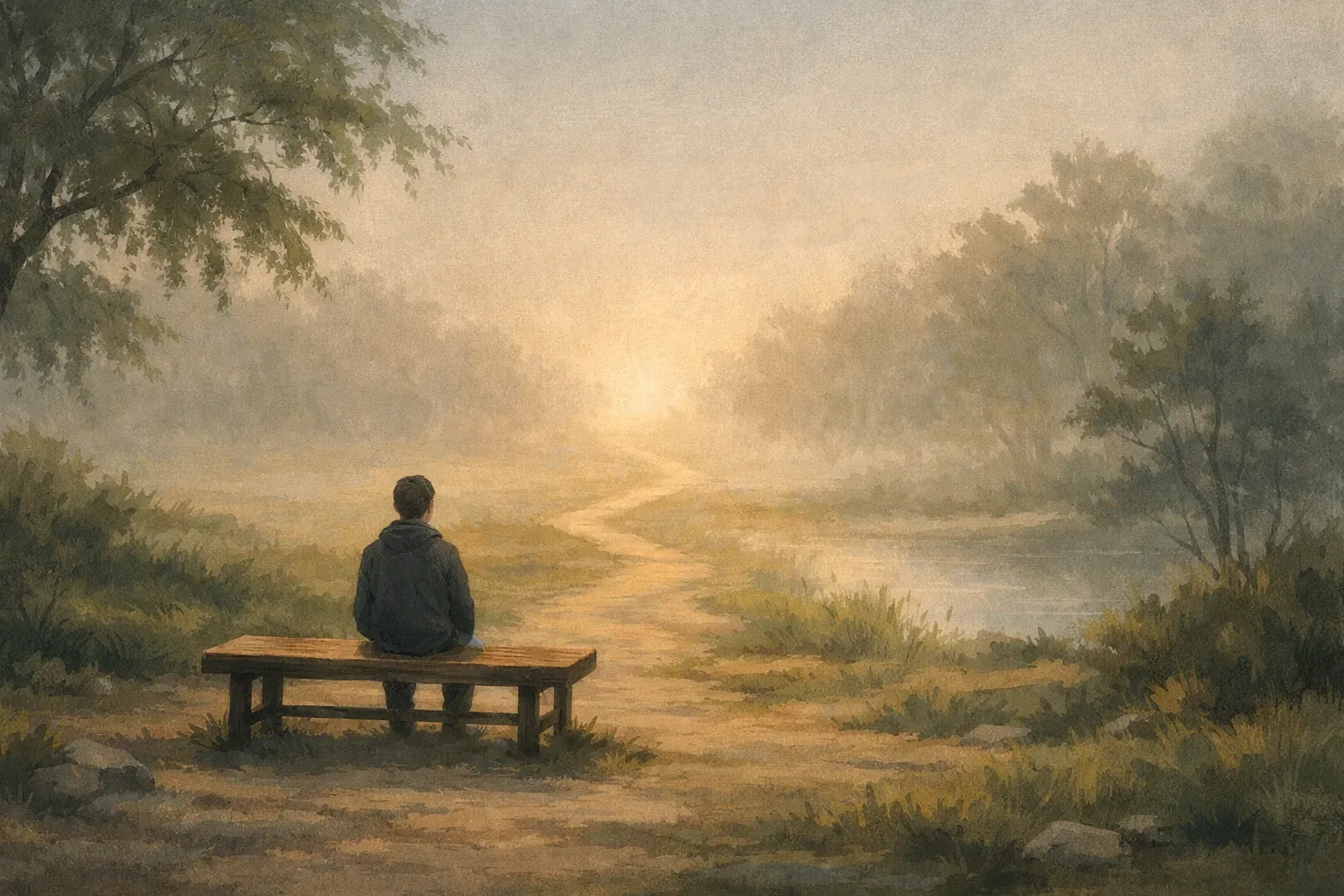
Before taking on any role in a terreiro, there is usually a period of silence and observation. Sitting in the assistência — the area where visitors sit during the gira — among strangers, stories, and quiet expectations, I slowly began to understand what this Brazilian spiritual tradition meant.

The second visit: a very different Umbanda gira
After the children’s celebration, I returned to the terreiro the following week.
My first visit had been full of joy. It was a Saturday afternoon, with many children running around, laughter everywhere, and a light atmosphere that seemed to push everyday worries aside for a few hours.
But that evening felt completely different.
It was colder. Quieter.
That night was a regular Umbanda gira — a spiritual gathering where mediums incorporate guiding entities who offer advice and spiritual assistance to visitors.
As people arrived, I started noticing something that might escape someone visiting a terreiro for the first time: every person carries a story.
Some arrived happy simply to be there.
Others looked lost, much like I felt at that moment.
And some carried a weight in their expression that hinted at deeper struggles.
I already knew that a terreiro was not only a place of celebration. But that evening made something clearer to me: it was also a place where many people came seeking help.
And at that moment, my old fears returned.
The atmosphere was more serious, and with it came the kind of expectations many of us grow up with — stories about spirits, the supernatural, and things that might feel unsettling.
Maybe I would see something strange.
Maybe something would startle me.
Curiously, over time the only times I was ever startled in that place were when I accidentally bumped into someone.
Never by an entity.
A simple space, full of meaning
Unlike the children’s celebration, there was no festive preparation.
The space was prepared in a simple way: cleaning the room, organizing the environment, and the coffee that, with time, would become almost mandatory before and after the gatherings.
That evening was dedicated to the Pretos-Velhos, a spiritual line in Umbanda associated with ancestral wisdom and quiet guidance.
These entities are often understood as figures connected to the memory and resilience of enslaved Africans in Brazil, known for their calmness, patience, and compassionate advice.
As during my first visit, someone briefly explained how the night would unfold.
Little by little, I began to realize that there was a clear structure behind the spiritual work taking place there, even though much of it was still mysterious to me.
Today I understand something that at the time I only sensed: the work of an Umbanda terreiro is not improvised.
There is a spiritual and human structure organized around service and charity.
But at that moment, I was simply beginning to observe.
And observing would be my main role for quite some time.
Who sits in the assistência?
As the weeks passed, I began to notice something interesting about the assistência — the area where visitors sit during the gira.
Different kinds of people were always present there.
Some were simply curious, trying to understand what that place was.
Others seemed eager to be invited to join the mediumistic circle, the group of mediums who worked spiritually during the gira.
After a few gatherings, I realized that I myself was starting to fall into that second group.
There were also people visiting the house for the first time, perhaps searching for a place where they felt spiritually welcomed.
Others were returning after long periods away.
But perhaps the largest group consisted of people seeking help.
Many were already Umbanda practitioners. Others came from very different religious backgrounds: Catholics, evangelicals, or people who said they believed in nothing at all.
Yet they were there.
Often because someone had recommended the place.
Or because they had already tried everything else within reach.
Over time, I also began to understand something that may be difficult to grasp outside the Brazilian context. Many people who arrive at a terreiro live with very real hardships. Before coming there, many have already sought doctors, advice, or any other kind of help available to them.
Sitting in the assistência, week after week, I slowly realized that this was a place where very different life stories met.
Stories of struggle, hope, and attempts to begin again.
And sitting there, almost always in silence, I was learning simply by observing.
My first passe in an Umbanda terreiro ritual
That evening we were invited, one by one, to step into the central area to receive a passe from a Caboclo, a guiding entity in Umbanda traditionally associated with the wisdom and strength of Brazil’s Indigenous ancestors.
A passe is a common practice in Umbanda gatherings. In simple terms, it is a spiritual gesture performed by incorporated entities through the medium, intended to help balance the person’s energy and offer spiritual support.
I had no idea what to expect.
As I walked forward, many questions crossed my mind.
Would I feel something?
Would I see some kind of divine light?
Would something supernatural happen?
And I admit there was also a slightly childish expectation: I hoped a very powerful entity would appear.
Over time I learned that the idea of a “powerful entity” has a much simpler — and somewhat delicate — answer.
But that is a topic for another text.
At that moment, I simply stood before the Caboclo.
I do not remember the name of the entity or the medium through whom he spoke. He simply asked if I was well.
I said yes.
Without saying much more, the Caboclo began the passe calmly.
First he raised his hands in front of my body, moving them slowly as if arranging something invisible in the air.
Then he held my hands for a moment.
After that he bent down to touch my feet.
The smoke of his tobacco passed gently in front of me, leaving its distinctive scent in the air.
Finally, he snapped his fingers around my body.
When he finished, he asked again if I was well.
For all the questions I had silently asked myself before that moment, the answer turned out to be simple.
I saw no lights.
I felt nothing extraordinary.
Just a quiet sense of well-being. A sense of being supported.
Conversations with the Pretos-Velhos
After the passes, people were called one by one to speak with the Pretos-Velhos.
Again the same silent question appeared in my mind:
Would I feel something now?
That question rarely disappears completely for someone who has just begun attending a terreiro.
I remember very little from that first conversation.
At that moment I was not trying to solve a specific problem.
My curiosity was different: I wanted to understand that universe.
Perhaps, without realizing it, the question I was really carrying was another one.
Was this truly the place — and the path — for me?
During that conversation I heard a lot about patience.
About learning.
About looking inward.
Patience has never been my strongest trait.
But learning has always motivated me.
One sentence I heard during that period stayed with me: if I looked inside myself, I would find everything I needed.
At the time I thought I understood.
Today I know it was only the beginning of a much longer learning process.
Thursday nights at the terreiro
Over time, those visits gradually became part of my routine.
For a few months, my Thursdays followed almost the same rhythm.
I left work around six in the evening, ate something quickly, and went straight to the terreiro.
At first, I simply remained in the assistance area.
Observing.
Later I started helping with small things outside the ritual space — organizing the room or assisting with whatever was needed before the gira.
It was a quiet kind of learning.
The first step.
Every gira began in a similar way. The curtains would close. Prayers followed, along with songs and greetings to the guiding entities and the Orishas, while the sound of the atabaque drums set the rhythm. After a few minutes, the curtains opened again.
For someone observing from outside, it might look like a sequence of gestures.
But for someone who watches week after week, it slowly becomes clear that there is an underlying order guiding the work of the terreiro.
At that moment I still did not understand everything.
But I was beginning to feel that something there made sense.
Coffee after the gira
When the spiritual work ended, there were words of gratitude.
To the entities who had worked that night.
To the spirits and people who had come seeking help.
To the Orishas.
And above all, to God.
Then came a moment that, for me, became almost as important as the gathering itself.
Coffee.
Often close to midnight, people would sit together, talk, laugh a little, and share impressions about the evening.
Another kind of learning happened there.
More human. More everyday.
Many questions found answers in those conversations — and sometimes new questions appeared.
And once again I learned in the same way I had from the beginning.
By observing.
By listening.
The first place where something made sense
Those Thursday nights became an important part of my life for a few months.
During that time I noticed something curious.
Some people appeared for a while and then continued on their own spiritual paths.
Others returned after long periods away.
It was as if each person was at a different stage of their journey.
Today I understand something that I was only beginning to perceive back then.
The first place where we find meaning is not always the place where we will remain forever.
Spiritual paths change. They mature. Sometimes they lead us somewhere else.
But that does not diminish the importance of the first place where something truly began to make sense.
Because it was there that a faith that once existed only as an idea or intuition began to take shape.
Perhaps that is why the assistência is one of the most important places inside a terreiro.
Before any formal role.
Before any mediumistic development.
There is a time to observe, listen, and learn.
It was there, sitting among strangers and hearing stories of suffering, hope, and faith, that I began to understand a little more about Umbanda.
And perhaps it was also there that I started to perceive something that now defines this space where I write.
A terreiro is born from the meeting of many stories, experiences, and life paths.
In a way, it is a meeting of worlds.
Perhaps that is why my own path began exactly like that: quietly observing, sitting in the assistência.
Entre mundos.
And perhaps this is simply another place from which we can continue this conversation.