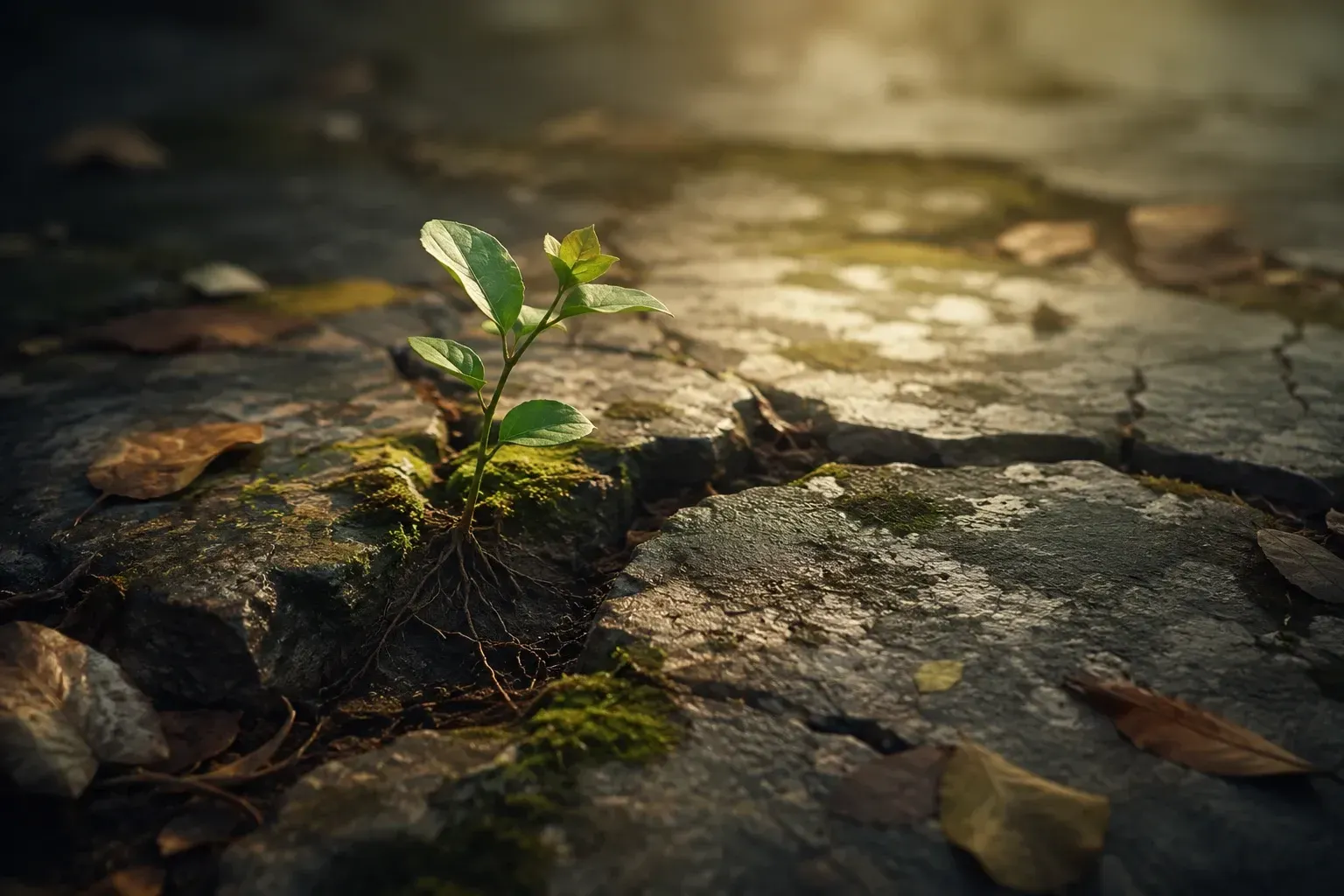
Mistakes and Spiritual Evolution in Umbanda: When a Mistake Is Not the End
For a long time, I thought spirituality meant an absence of mistakes. Through Umbanda, the Orishas, and the study of Odù, I began to see mistakes as part of spiritual evolution: not as condemnation, but as a call back to balance.

Is there sin in Umbanda?
For a long time, spirituality was connected, for me, with the attempt to avoid mistakes.
As if living spiritually meant maintaining some kind of constant purity.
Not only in actions.
But also in thoughts, feelings, desires, and impulses.
Maybe that is why, for many years, guilt seemed so close to the idea of religion.
A mistake always seemed to carry a definitive weight.
As if some failures could mark someone permanently.
Over time, however, one of the things that drew me closer to Umbanda — and later also to other Afro-Brazilian traditions — was finding a different way of looking at this.
Not because mistakes were treated as something unimportant.
But because they did not appear as absolute condemnation either.
Maybe that is why the question of sin in Umbanda always seemed difficult for me to answer in a simple way.
In my experience, Umbanda does not frame mistakes primarily as sin, in the sense of an eternal guilt before the divine.
What I found there was another language: consequence, responsibility, learning, and the possibility of transformation.
Little by little, I began to understand that spiritual evolution may not begin when we stop making mistakes, but when we learn to look at our own mistakes with responsibility.
Karma, consequence, and spiritual responsibility
In my experience, actions have always carried weight within these traditions.
Choices produce consequences.
Some are small.
Others are deep.
Some seem to be resolved quickly. Others require years of maturation.
And there are also situations that many people understand as longer processes, passing through different experiences in life.
It was also in this context that I began to hear about karma — not as punishment, but as consequence, learning, and continuity.
As something that does not necessarily end in a single moment of existence.
At the time, this left a strong impression on me.
Because there was an important difference between consequence and condemnation.
Consequence speaks of responsibility, maturation, and transformation.
Condemnation, on the other hand, closes the possibility of change.
And maybe that was exactly what brought me the most peace.
The idea that a mistake did not have to represent the end of the path.
Mistakes and spiritual evolution: a mistake is not the end of the path
Over time, I began to notice something else.
The question never seemed to be simply “making mistakes or not making mistakes.”
Because making mistakes is part of human experience.
What seemed truly important was something else:
what we do afterward.
Whether we are able to recognize our own imbalances.
Whether we are able to change.
Whether we are able to keep walking.
Maybe that is why one of the strongest ideas I found in these traditions is the idea of movement.
Spiritual life did not seem to demand absolute perfection.
It seemed to ask for the willingness to keep growing.
And maybe there is a quiet risk precisely when someone decides to remain trapped in their own excesses, addictions, impulses, resentments, or repetitive cycles.
Not because this turns someone into something “lost.”
But because transformation itself requires movement.
Orishas, balance, and the contradictions of life
Maybe that is why the myths of the Orishas have drawn my attention so much over time.
In them, the forces of life do not appear completely purified or distant from human experience.
The myths of the Orishas also present tensions, excesses, disputes, impulsiveness, suffering, losses, and processes of transformation.
Oshun, for example, appears connected to love, fertility, beauty, and welcoming care. But she may also appear associated with jealousy, vanity, and cunning.
Shango is connected to justice, strength, and leadership. But his myths also speak about impulsiveness, intensity, and excess.
Even faith, connected to Oshala, seems to carry polarities. Faith can sustain someone in the most difficult moments. But when it loses balance, it can also become rigidity, extremism, or distance from concrete life.
Over time, this began to show me something important:
maybe spirituality is not about completely eliminating human contradictions.
Maybe it has more to do with learning to relate to them more consciously.
Odù, Odi Meji, and balance as a path
Later, when I began to study the Odù of Ifá and the jogo de búzios — the cowrie-shell oracle used in Afro-Brazilian traditions — some ideas began to make even more sense to me.
The Odù are symbolic and philosophical structures that carry stories, meanings, and paths of interpretation within these traditions.
For me, they did not arrive as immediate answers.
Nor as ready-made answers.
More as images that help us look at life in another way.
Among them, Odi Meji was one of the Odù that gave me something to reflect on along the way.
Without trying to reduce something so complex to a single interpretation, I began to see in this Odù a very strong connection with balance and rebirth — not only as starting over, but as the ability to renew oneself, to abandon what no longer makes sense, and to leave behind what prevents spiritual growth.
There is, at least in the way I came to understand it over time, an idea deeply connected to the need to correct excesses and find direction again.
Not as perfection.
But as adjustment.
Like someone who realizes they have moved away from their own center and needs to relearn how to walk more consciously.
And maybe there is something deeply human in that.
Because not all learning happens gently.
Sometimes life asks for pauses.
Changes.
Losses.
New beginnings.
Moments when we are forced to look at what we have avoided for a long time.
And maybe part of spiritual growth lies precisely in this ability to move through transformations without ceasing to move forward.
When perfection also becomes imbalance
Over time, I began to realize something else.
The obsessive attempt to never make mistakes can also create imbalance.
There is a point where the search for perfection stops generating growth and begins to generate fear.
Fear of failing.
Fear of disappointing.
Fear of not being enough.
And fear also paralyzes.
Maybe that is why these traditions brought me closer to the idea of continuous evolution than to the idea of absolute purity.
Life did not seem to be seen as a test where someone definitively “passes” or “fails.”
It seemed closer to a constant process of learning.
Sometimes slow.
Sometimes painful.
Sometimes full of setbacks.
But still a path.
Between mistake, sin, and perfection
Today, maybe I see spirituality in a very different way from what I imagined in the beginning.
Not as an attempt to become someone incapable of making mistakes.
And not as an excuse to remain the same either.
Over time, one idea began to make a lot of sense to me: if our essence comes from the divine, then maybe that essence already carries something sacred within it.
Within the Yoruba tradition, there is the idea of the breath of Olódùmarè — the divine life force that animates existence and connects each being to the spiritual origin of life.
And this changed the way I began to understand spiritual growth.
Because if this divine principle is already present in our essence, then maybe the path is not about “correcting who we are” at the root.
Maybe the question is more connected to the consciousness we came to develop through experience.
This also makes me think of the myth of Ajala, the potter responsible for shaping the ori before birth.
Ori, in a simple way, can be understood as the spiritual head, the inner self, or the individual destiny each person carries.
Not every ori would be shaped in the same way.
All of them would carry flaws, fragilities, tendencies, excesses, or some kind of difficulty from the beginning.
And still, they would be chosen.
This image has always seemed very profound to me because it suggests that human existence is already born with its own challenges.
Not as a definitive mistake.
But as part of what each consciousness came to learn how to refine throughout life.
Maybe that is why the spiritual path is not about completely eliminating flaws, as if it were possible to erase everything that makes us human.
Maybe it is about learning to recognize these tendencies, mature through them, and expand consciousness without losing connection with our own essence.
Experience plays an important role in this.
The choices, encounters, conflicts, losses, excesses, and new beginnings are what gradually shape consciousness along the way.
Not to replace what we are at the origin.
But to refine.
To mature.
To develop balance.
This changed my way of looking at spirituality quite deeply.
The idea stopped being about reaching an impossible perfection and became more about growing, expanding consciousness, and learning to move through the human experience more consciously, without losing connection with what exists most deeply within us.
Continuing the path after a mistake
Today, looking back, maybe one of the greatest changes was exactly this.
I stopped seeing spirituality as the attempt to become someone incapable of making mistakes.
And I began to see it more as the ability not to interrupt one’s own path in the face of mistakes.
To recognize.
To learn.
To correct.
To begin again.
Sometimes quickly.
Sometimes after a long time.
But to keep going.
Because maybe the real risk was never making mistakes.
Maybe the greater risk is completely losing the will to keep growing.
To keep learning.
To keep transforming.
Entre mundos.
And maybe spiritual evolution has less to do with reaching a perfect state and more to do with moving, consciously, through the experience of existing.